


Because SitStay is all about good healthy dogs, we have many people ask us all the time about a variety of supplements for their dogs. One of the most common that comes up is coconut oil for dogs. Many of our customers want to know if coconut oil is good for dogs.
To help, we've decided to put together the best guide out there to answer all of your questions about coconut oil for dogs.
Is Coconut Oil Good For Dogs?
Can dogs have coconut oil? The short answer is Yes. Coconut oil can help aid your pets' digestion, improve their coats, help prevent infection and more. But please note, it is important to follow the proper guidelines. As with most things, too much of even a good thing can end up having negative effects.
Why Coconut Oil Is Healthy For Pets
The big benefits of coconut oil come from the fats it is made of. Coconut oil is almost exclusively (more than 90%) saturated fat and is one of the few foods that can be classified as a "superfood." I know what you're thinking, "isn't fat bad for you?" In this case no. There are two groups of fats: saturated fats and unsaturated and within each group are several more types of fats.
MCT's are coconut oil's secret weapon. Medium chain triglycerides (MCT) are good fats, the kind that provides an array of benefits which include digestion improvement, immune system support, metabolic function that assists with weight loss, skin and coat health and thyroid health.
MCTs include lauric acid, capric acid, caprylic acid, myristic acid, and palmitic acid. Coconut oil also contains about 2% linoleic acid (polyunsaturated fatty acids) and about 6% oleic acid (monounsaturated fatty acids).
Lauric acid has antibacterial, antiviral, and anti-fungal properties. Capric and caprylic acid also have similar properties as lauric acid and are best known for their anti-fungal effects.
In addition, MCTs are efficiently metabolized to provide an immediate source of fuel and energy, enhancing athletic performance and aiding weight loss. In dogs, the MCTs in coconut oil balance the thyroid, helping overweight dogs lose weight and helping sedentary dogs feel energetic.
Ok enough of the science, now on to the fun stuff.
Check out these creative ways to get coconut oil into your dogs diet!
Benefits of Coconut Oil for Dogs
As we've stated, coconut oil has several benefits for your dog. Let's go over a few of them. Some evidence suggests that coconut oil gently elevates the metabolism, provides a higher level of energy and vitality, protects your dog from illness, and speeds healing. As a bonus, coconut oil can improve dog’s skin and coat, improves digestion, and reduces allergic reactions.
Potential benefits that may have been attributed to coconut oil include:

Healthy Skin and Coat
- Clears up eczema
- Aids flea allergies, contact dermatitis and itchy skin
- Minimizes doggy odor
- Reduces allergic reactions
- Creates sleek and glossy coats
- Prevents and treats yeast and fungal infections
- When applied topically coconut oil promotes wound healing
- Also can help with hot spots, dry skin and hair, bites and stings
Improves Digestion
- Improves digestion
- Increases nutrient absorption
- Helps with colitis and inflammatory bowel syndrome
- Reduces or eliminates bad breath
- Helps with coughing
"Superfood" Benefits
- Assists with weight loss
- A powerful antibacterial, antiviral and anti-fungal agents
- Balances insulin and promotes normal thyroid function
- Helps prevent or control diabetes
- Aids arthritis and ligament problems
- Helps prevent infection and disease
- Aids in increasing energy

How Much Coconut Oil for Dogs
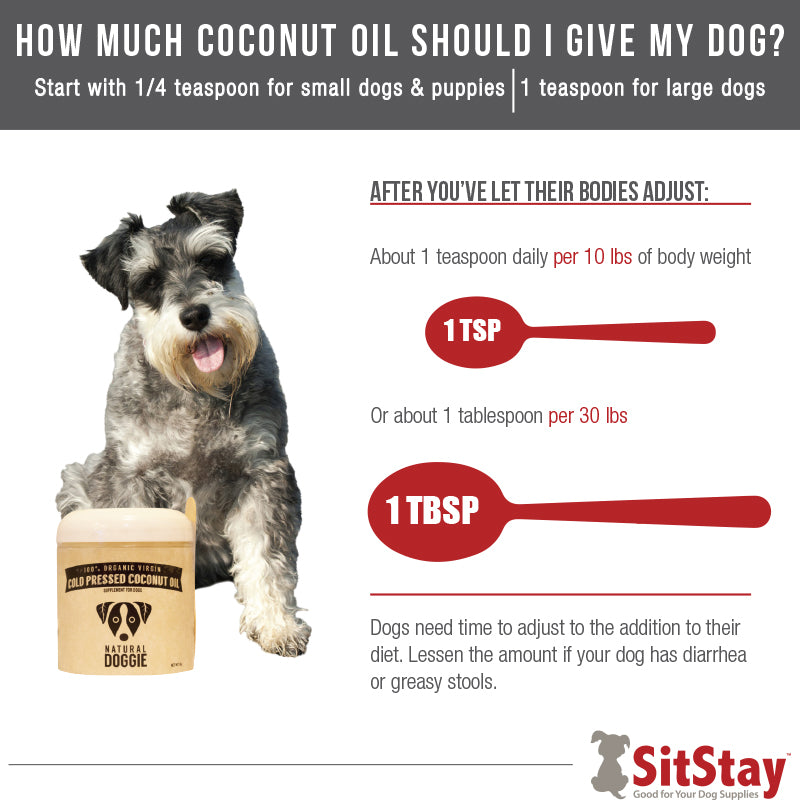
How much coconut oil should you give your dog? When starting your dog on coconut oil, it is absolutely vital that you start slow. Begin slow, starting with a tiny amount. Your dog needs to take time for their body to adjusts to the addition to their diet. If you start with a larger amount of coconut oil, your dog could react poorly. Side effects can include diarrhea or greasy stools.
We have covered a lot so far, for more info about fats check out, WEBMD for some good information.
Start with Small Amounts
- ¼ teaspoon per day for small dogs and puppies.
- 1 teaspoon for large dogs, or even just a dab if your dog's constitution is sensitive.
After you've let their body adjust, a general guideline for the optimal dose of coconut oil for dogs is.
- About 1 teaspoon per 10 pounds of body weight daily
- Or about 1 tablespoon per 30 pounds
Again, DO NOT start with these amounts in the beginning!
For a free printable infographic of the dosage amounts, click here.
Coconut Oil On Dog's Skin
In addition to giving your dog orally, coconut oil can be applied directly to your dog's coat and skin. As we stated earlier, because coconut oil contains lauric acid, it is a fabulous immune builder, both orally and topically.
A coconut oil treatment will leave your dog's skin incredibly soft, but it will also make it healthier. A coconut oil skin treatment about once a week can make a big difference in the health of your dog's skin and nails.
For good results, apply to the skin and let the oil absorb for about five minutes. After the five minutes, you can apply and a very light rinse. If you feel you haven't removed the excess oil, finish up with a light application of shampoo and another quick rinse.
Coconut Oil For Dogs Side Effects
Your dog may experience some side effects from coconut oil. Generally this happens if you give too much coconut oil to your dog too quickly. We recommend that you start slowly and see how your pet reacts. The most common side effects for your dog can include diarrhea or greasy stools.
Coconut Oil Dog Products
While you can give your dog straight coconut oil, what we REALLY love, are treats that have nutritional benefits for our four-legged family members. Here are some fantastic healthy products that your dog will love, with the benefits of nutritious coconut oil.
Within two weeks, his coat was more silky, his skin wasn't red and irritated and he stopped itching so much. The best part is he loves it! He will not eat his kibble without the oil. Definitely give this natural remedy a try!
My dog would spit out pills wrapped in pb, cheese, or meat but will gobble down anything in coconut oil. His fur is silky soft and he burps less often now too.
It's important to note that there have not been extensive studies on the benefits of coconut oil, and not all veterinarians agree with these purported benefits. When using coconut oil, or any other nutritional supplement, remember the prhase "your mileage may vary" and look for benefits in your individual pet.
If you've learned anything from this guide, be sure to share it with your friends! If you still have questions about coconut oil for your dog, visit our Frequently Asked Questions About Coconut Oil For Dogs blog.
Meet The Author
Canine Specialist & Writer
Grant is an award-winning writer for SitStay with a passion for pets and especially dogs! Grant loves writing about furry little goofballs and aims to educate pet parents about anything and everything regarding their dogs.
Medically Reviewed By
Veterinarian
Catherine is a veterinarian and freelance writer based in Florida. After 14 years as a small animal general practitioner, Dr. Barnette now focuses on creating educational content for veterinary teams and their clients. She shares her home with her husband, daughter, one dog, two cats, and a rescued white dove.


114 thoughts on “Coconut Oil for Dogs - The Ultimate Guide 2022”
Destiny H.
I would like to start using coconut oil for both my doggies. Their breath has become smelly and I’d like to do as much as I can to help them prevent diseases and additional odors! Can I use organic coconut oil that has been refined? Thank you!
Debbie Guilbeau
I have a 13 yr. old beagle that has an enlarged liver and heart and her hind legs are wobbly after she walks a while but when she goes out hunting around on a leash she is fully of energy. She hasn’t been wanting to eat anything but cooked chicken or beef so she is not getting the vitamins she needs. She is on heart meds and a fluid pill and also Denosyl for her liver. Also has a bad cough after drinking water and every now and then at other times. All this started after taking Simperica in July for flees and ticks. Not sure if it is just her age or the meds she took for the flees but trying to help her skin coat and also the rest. Do you think the coconut oil will be beneficial to her.
SitStay Hannah
Hello Mary,
We STRONGLY recommend taking your dog to the vet right away. Coconut oil is a great product but it does take time before your dog will notice a change.
Thanks,
Hannah
Mary Oliver
I have a 70 pound female Shepard, she takes spells and refuses to eat. I think she might have hair balls she sheds Alot and doesn’t cough, but burps Alot . She had diarrhea the other day and my son said it was black so I gave her coconut oil, how long before it starts working? Then I will check her stool for hair. Any other suggestions or reasons you could give me?I’m at my wits end about eating good then not eating at all .I will listen to all help , we love her Alot, don’t like to c her doing this Please help thanks
SitStay Hannah
Hi Debby,
You can definitely rub the coconut oil onto their skin/coats and not need to worry about rinsing it off. The oil will sink into the skin, or your pup will lick it off. Either way your dog will receive the benefits. You can also put coconut oil on their paws and hot spots. If your dog is sensitive there, however, we recommend feeding it to them rather than rubbing their skin where it is sensitive.
Thanks,
Hannah